It’s the first week of February, and after weeks of near-constant rain, the UK is firmly in the grip of winter. Roads are slick, lanes are waterlogged, and forecasts offer little more than variations on grey. Nowhere does it feel more pronounced than in Yorkshire, where persistent rain has turned even familiar roads into a daily test of grip, judgement, and patience.
This is the season where riding stops being about speed or numbers and becomes something quieter: staying upright, staying warm, and deciding—each day—whether to head out at all.
What Weeks of Rain Do to Riding
Relentless wet weather changes everything. Braking distances increase. Corners demand restraint rather than confidence. Puddles hide broken tarmac, debris, and diesel sheen. Familiar routes suddenly require attention, not autopilot.
It’s not dramatic rain that wears you down—it’s the accumulation. Day after day of damp kit, gritty drivetrains, and rides that start and finish in the same muted conditions.
A Complicated Relationship with Rain
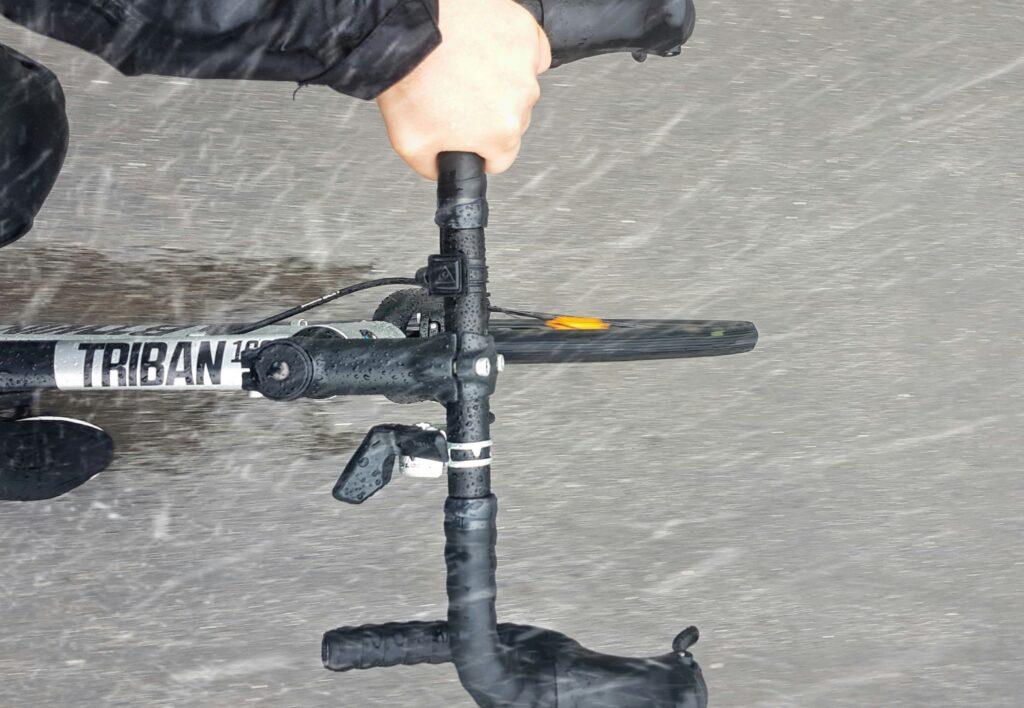
I’ve always had a conflicted relationship with riding in the rain. In summer, the threat of it can be enough to put me off heading out—unless I’m persuaded otherwise. But if it starts raining mid-ride, that’s different. Once you’re already wet, the decision is made.
Winter rain doesn’t offer that same lightness. It’s heavier, colder, and more persistent. But it does sharpen your awareness. You ride smoother. You brake earlier. You listen more closely to the road.
Why Winter Riding Is Different
In winter—especially after weeks like these—you stop chasing perfect rides. Instead, you adapt. Shorter loops. Lower expectations. More stops. Less ego.
There’s a particular satisfaction that comes from winter rides in places like Yorkshire: returning home splattered with road grime, face wind-burnt, kit soaked through, knowing you chose to go anyway. Those rides don’t always feel good in the moment—but they linger longer afterwards.
The Bike Feels It Too
Weeks of rain are hard on bikes. Grit works its way into chains and bearings. Brakes wear faster. Cleaning becomes less optional and more routine. Winter riding demands more maintenance, more attention, and more acceptance that things won’t stay pristine for long.
It’s part of the trade-off of riding year-round. The miles still count—but they leave a mark.
Learning to Ride the Season, Not Fight It
Winter doesn’t need to be something to endure. Many riders quietly reframe it: slower rides, fewer goals, more social miles. Cafés matter more than segments. Consistency matters more than intensity.
When treated this way, weeks of rain stop feeling like an interruption and start feeling like part of the rhythm. A backdrop rather than a barrier.
A Fair-Weather Admission
I’ll admit it: I’ve become more selective over time. I’m less inclined to ride straight into a storm simply for the story afterwards. These days, the thought of the cleaning job—salt, grit, and water ground into every component—is often one of the first things I consider.
But when I do head out? It’s always worth it. The ride rarely goes as planned, but it nearly always delivers something unexpected.
Why We Keep Riding
Weeks of rain strip cycling back to its basics. There’s no spectacle, no perfection—just movement, rhythm, and resilience. Winter riding, especially in places like Yorkshire, reminds you why cycling isn’t just a fair-weather pursuit.
Bring on the rain. Bring on the quieter miles. They all count.
Words by Emma Nicholson
FAQs: Riding Through Winter Rain in the UK
Is it safe to ride a bike in the rain?
Yes, with care. Wet roads reduce grip and increase braking distances, so riding smoothly, braking earlier, and avoiding sudden inputs are key. Visibility and road debris also require more attention in wet conditions.
Why does cycling feel harder after weeks of rain?
It’s usually the accumulation rather than the rain itself. Damp kit, gritty roads, heavier bikes, and reduced daylight all add up, making rides feel more demanding physically and mentally.
How does winter rain affect bike wear and maintenance?
Rain and road grit accelerate wear on chains, cassettes, brake pads, and bearings. Regular cleaning, lubrication, and basic checks become more important during prolonged wet periods.
Is winter riding worth it in the UK?
For many riders, yes. Winter riding tends to be slower and less performance-focused, but it can be highly rewarding. Many cyclists value the consistency, resilience, and mental reset that winter miles provide.
Do I need different insurance for winter riding or riding abroad?
Cover for the bike (such as bicycle insurance or appropriate home insurance) is separate from cover for the rider. If winter riding leads to trips abroad, travel insurance is designed to cover medical treatment, cancellation, and travel disruption. Always check policy wording for details.
Riding year-round means planning for the conditions
Wet roads, winter miles, and unpredictable conditions are part of cycling in the UK. Many riders choose bicycle insurance or home insurance for cyclists
to help protect against theft and accidental damage as part of owning and riding a bike year-round.
And if winter riding leads you abroad—whether for training, events, or a change of climate— travel insurance is designed to cover you for medical treatment, cancellation, and disruption while you’re away.